- Victory Tax Brief
- Posts
- One Form That Could Stop an IRS Levy
One Form That Could Stop an IRS Levy
The Victory Tax Brief | Issue #24

Parham Khorsandi
March 12, 2026
Most taxpayers assume that when the IRS files a lien, issues a levy, or rejects a payment plan, the decision is final.
It isn’t.
In many cases, taxpayers have the right to challenge how the IRS is collecting a tax debt before enforcement continues. One of the fastest ways to do this is through IRS Form 9423, also known as a Collection Appeal Request.
When used correctly, this form can pause certain collection actions and trigger a review by the IRS Independent Office of Appeals.
At Victory Tax Lawyers, we help clients navigate complex tax issues, from audits and back taxes to liens and fraud investigations.
If you’re unsure whether you need expert help, call (800) 883‑8301 for a free consultation.
⚖️ What IRS Form 9423 Is Designed To Do
Form 9423 is used to request a review through the Collection Appeals Program (CAP).
This process allows taxpayers to challenge specific IRS collection actions, including:
Federal tax liens
Bank levies
Wage garnishments
Property seizures
Rejected or modified installment agreements
The appeal does not dispute the tax debt itself. Instead, it challenges how the IRS is attempting to collect it.
In many situations, filing the form can temporarily pause enforcement while the appeal is reviewed.
⏱ Timing Matters More Than Most People Realize
The Collection Appeals Program moves quickly. In many cases, appeals must be filed within days of the IRS action or manager meeting.
Missing the window can allow the IRS to proceed with enforcement measures like levies or garnishments.
That’s why it’s critical to act immediately after receiving certain IRS notices or decisions.
If you’re unsure whether you still have appeal rights, call (800) 883-8301 to discuss your situation before the deadline passes.
📝 How the Form 9423 Process Works
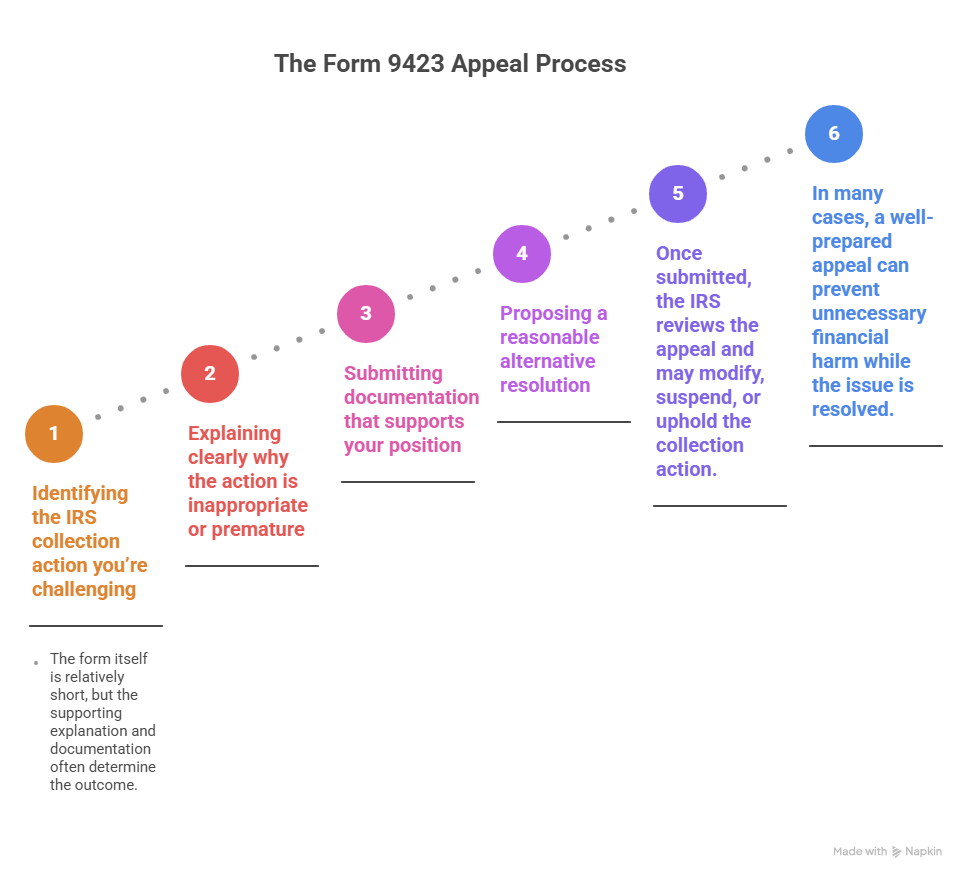
The form itself is relatively short, but the supporting explanation and documentation often determine the outcome.
A typical appeal involves:
Identifying the IRS collection action you’re challenging
Explaining clearly why the action is inappropriate or premature
Submitting documentation that supports your position
Proposing a reasonable alternative resolution
Once submitted, the IRS reviews the appeal and may modify, suspend, or uphold the collection action.
In many cases, a well-prepared appeal can prevent unnecessary financial harm while the issue is resolved.
⚠️ Where Many Taxpayers Go Wrong
While the form is only one page, mistakes during the process can weaken an appeal.
Common problems include:
Missing strict filing deadlines
Submitting incomplete financial documentation
Using emotional arguments instead of factual evidence
Filing the wrong appeal type for the situation
Choosing the correct process matters. For example, some situations require a Collection Due Process hearing instead of a CAP appeal.
If the IRS has taken or threatened a collection action, you may still have the right to appeal.
Victory Tax Lawyers helps taxpayers challenge improper collection actions and navigate IRS appeals through programs like CAP.
Call (800) 883-8301 to schedule a free consultation and learn whether filing a Collection Appeal Request could help protect your finances.